What strategic people do
Bad advice
“You need to be more strategic.”
“Senior product managers do strategy.”
“To get promoted you have to show you can think strategically.”
Earlier in my career, I used to hear a lot of advice like this - and I didn’t have a clue what to do with it. I didn’t think it sounded wrong, necessarily. Strategy definitely felt linked to leadership and more senior roles. But what I didn’t get was what “being strategic” actually looked like day to day.
The definition of strategy can be stretched to mean lots of things in different contexts. If you google “strategy, you’ll find an abundance of templates, frameworks and fill-in-the-blank guides. Too often these produce what I call strategy-shaped objects: things that initially look plausible, but are almost entirely surface-level.
This piece is my attempt to set out what strategic people actually do, day to day, in a way I like to think a younger me would've found useful.
Better advice
Strategy is about having a specific direction you want to go and a feasible way to get there.
Specific means you must make a choice. Strategy requires trade-offs: you can’t go left and right at the same time.
Many poor attempts at strategy fail here. If you oscillate between positions, everything downstream inherits the confusion - and at best, the things that work will work by accident rather than design.
Once you have clarity on the specific direction you want to take, you can become deliberate and intentional about getting there.
- Specific: we are going there…
- Deliberate: we chose to go there for a reason…
- Intentional: And our activity reflects that deliberate choice.
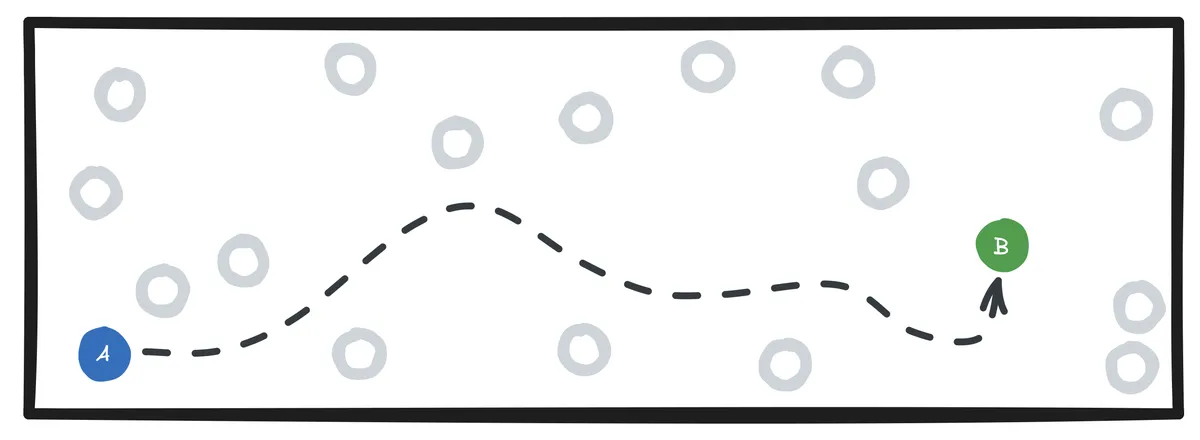
This set of related ideas represented a complete mindset shift for me – admittedly, a shift that came gradually, rather than in one flash of inspiration.
Together, they are the difference between optimising within a frame you’re given, versus questioning and shaping the frame itself.
A product manager who is not thinking strategically might ask: How do we migrate 100,000 users before March?
A product manager thinking strategically might ask: Why does it have to be March? Why all 100,000 in one go? What happens if we did it differently? Why do we have to do it at all?
A note - this doesn’t mean asking pointless, vacillating questions for fun, or endlessly kicking the can down the road. Quite the opposite. You’re trying to identify the fastest and most effective way to actually achieve your intended outcome, not just do things that might get you there.
Perhaps March turns out to matter. Perhaps all 100,000 users really do need to move. In that case, fine - you’ve just tested the frame, and you can make a plan to get there with far greater confidence.
But maybe March was just an arbitrary date that hardened into a commitment over time. Perhaps most of those 100,000 users are inactive. Perhaps migrating everyone turns out to cost more than the money you'll save from turning off the old system.
These are all meaningful considerations – considerations that could save lots of time, effort and cost. In the sort of work I do (public sector digital transformation), that’s our taxpayer money.
Your ability to step outside the frame you’re given depends on two things: what you know, and what you do.
Knowing
Types of knowledge
The more things you know about, the more patterns you have available to recognise and apply in the context you find yourself in. Strategic people don’t just work with the knowledge they happen to have. They deliberately acquire knowledge: knowledge about the domain, knowledge related to it, and knowledge that might have no obvious link.
For example, I recently led a project looking at digitising a manual tax compliance process. In that context:
- Domain knowledge: understanding how the service works today, the wider HMRC landscape, the types of users involved, and patterns for designing usable interfaces with complex financial data.
- Adjacent knowledge: the GDS Service Standard, ideas from Good Services and Platformland, how this sort of digitisation fit into the government’s wider digital roadmap, the economic environment in the UK at the time.
- Abstract knowledge: How markets, taxation and multinational companies are set up, what financial controllers need to study to qualify, how tricky it is to make PDFs accessible.
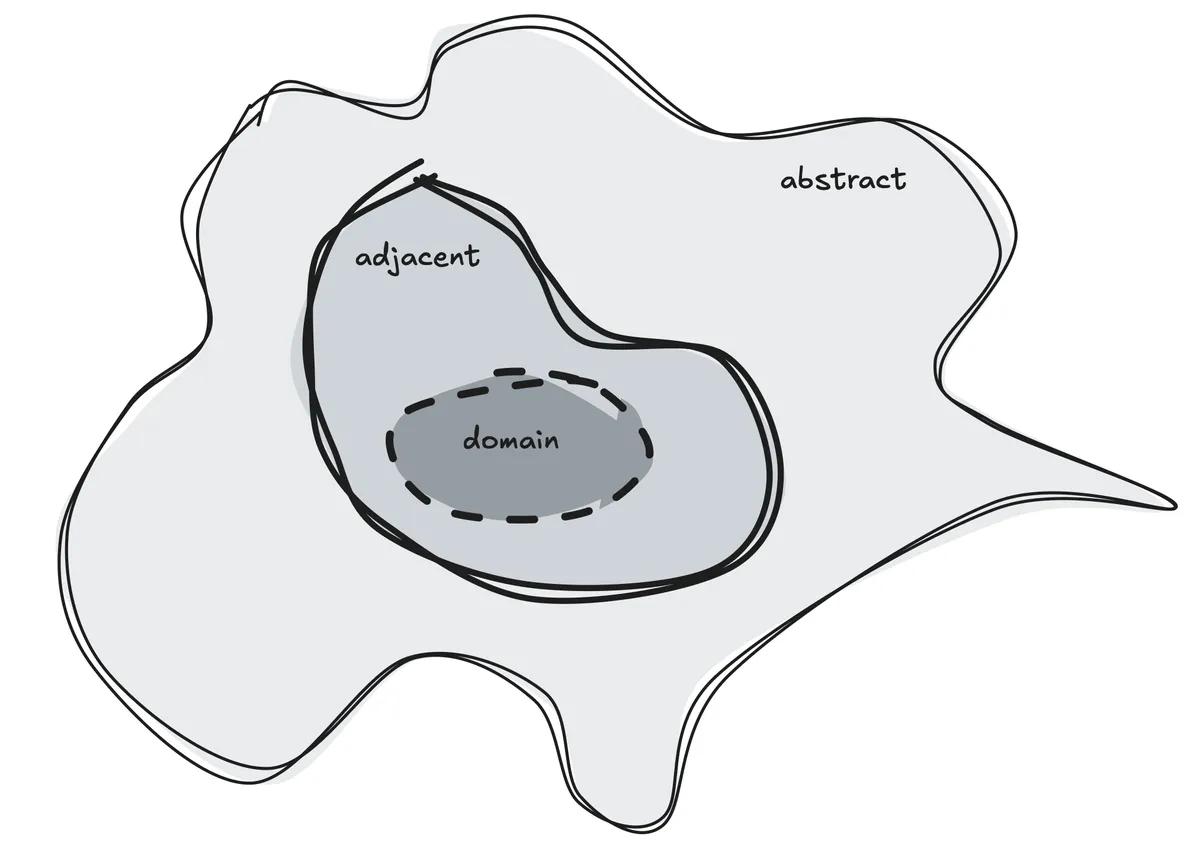
I studied economics at university, and I learned a lot about accessibility and WCAG standards on a previous project. That knowledge wasn’t acquired for this particular piece of work, but it gave me additional lenses to understand what I was looking at and how to proceed.
You don’t always know in advance which pieces of knowledge will become useful. But the more things you know, the more raw material you have to draw from.
The curve of progress
Strategic people try and understand the shape of the thing they’re operating in. I'm conscious that is a vague statement, so let me try and make it concrete. You’re rarely working on something that sprang into existence the day you joined it. Technologies have trajectories, organisations have histories. The thing you’re working on right now started somewhere – a business case, an idea a now retired Director had – and has been on a journey from its inception to where it is now.
That journey tells you a lot about where it might go next.
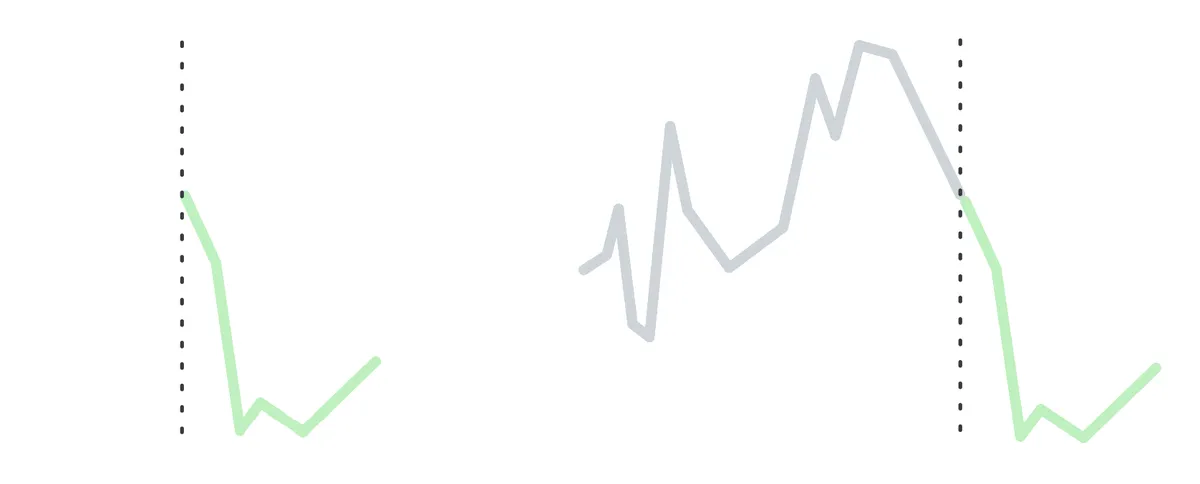
Looking backwards can make you better at looking forwards: our brains are pattern recognition machines. Over time, you'll find yourself better able to recognise which developments are genuinely new, which are repetitions of something that has happened before, and which apparently fixed and irreconcilable constraints are just the remnants of an earlier decision.
Improving your judgement
Raw knowledge acquisition is only part of the puzzle. You also need to develop the judgement to know when and how to apply the things you’ve learned. You can spend a decade being involved in decisions without becoming much better at making them.
I have found it useful to treat my judgement as a skill I can deliberately calibrate and improve over time. Typically that involves writing down what I think is going to happen before it happens - my assumptions, my theories, things to watch out for. Then, I come back later and compare my notes to what happened (I do this at least once a year, usually around Christmas time). Where was I right? Where was I wrong? What obvious things did I miss? Why?

It is surprisingly uncomfortable: it creates the possibility of feeling stupid later. But that’s a tiny price to pay. I started making these sorts of notes (and occasionally sharing snippets) as an intern. I carried on as a graduate. I kept doing it as a working level product manager, then a senior product manager, and into my current role. Making your thinking visible – first to yourself, then perhaps others – gives you the opportunity to stress-test it, and something concrete to return to later.
The same applies to reading. I try to read widely and actively – the ‘active’ part is usually something as simple as jotting down a sentence or two about what the chapter, or book, or podcast means for the thing I’m working on right now. It turns passive consumption into a deliberate attempt to map things you’re finding out to your mental model of the world.
Doing
Strategy is often conflated with only thinking, planning and organising - and it shouldn't be. Effective strategists do. Strategy must be applied to reality as quickly as possible. The shiny Mural template and the leadership away day are comfortable they don’t really ask anything meaningful of you. There is often no risk, no real commitment, and no skin in the game. Strategy means making choices and living with them.
There are a few behaviours I’ve found particularly useful:
Ladder everything upwards
Ask what the work in front of you is actually in service of – what it’s connected to. A feature you ship should contribute to a tangible outcome. An outcome should mean something real for your product or service. What does the programme or organisation ‘get’ now you’ve done your thing?
Again, this is not navel gazing or work around the work. This doesn’t mean retrofitting every Jira ticket to an organisational objective so that the boxes turn green. If you genuinely can’t explain how a significant piece of work contributes to something that matters, ask why you’re doing it.
Question the rules of the game
Think about the migration example above. You could spend vast amounts of energy getting better at playing a game (migrating users) without stopping to ask whether the rules make sense. Targets, deadlines, organisational boundaries, technology choices and established ways of working can often start to feel inevitable.
The universe is often far more malleable than you might think.
Invest in production capacity
It's very easy to finish up a week having done an enormous amount, without having made next week any easier. Strategic people deliberately invest some of their effort in increasing their future ability to get things done.
That might be improving a process you repeatedly fight with, building a reusable component rather than solving the same problem again, automating something you currently do manually, improving your understanding of a difficult part of the organisation, or investing in a relationship you know will matter later.
I like the simple discipline of making at least one deliberate investment in production capacity each week. Something that actually moves the needle – a big rock in your jar.
Learn how the organisation actually works
Take organisational mapping seriously. An org chart tells you where people formally sit, but much less about how an organisation actually works.
Who has influence? Who understands the history? Who do people turn to when something difficult happens? Which relationships matter? Where does funding come from? For how long? Which previous attempts at solving this problem failed badly enough that people still remember them?
Something that looks irrational when you arrive can suddenly make sense once you understand what preceded it. This is knowledge you acquire by paying attention, talking to people and doing the work to jot it down. You often cannot get it from the intranet.
Earn the right to challenge
Questioning the frame doesn’t mean arriving somewhere new and immediately declaring that everyone has been playing the game wrong. You need credibility, because people are much more willing to listen to your challenge when you’ve demonstrated that you understand the work and can execute. Show that you understand the game before trying to change it.
Football is full of teams copying whatever the best managers are doing. Pep Guardiola’s teams play out from the back - everyone starts playing out from the back. The visible behaviour is easy to imitate – but the thinking that reasoned that ‘tiki taka’ was the right strategy for that moment, much harder to replicate.
Strategy should not be about sounding clever
The best strategies often sound almost obvious once you hear them. Simple, true, coherent. A strategy that needs a million slides, elaborate models and lots of flowery language to hold itself together probably hasn’t survived enough contact with reality.
As David Hockney put it, “It takes a long time to make it simple.”
Are you being strategic?
Nobody is going to tap you on the shoulder and invite you to "be strategic". You don’t need a particular job title, or a manager to give you permission to start thinking (and acting) more strategically.
Here's a set of three questions to review at regular intervals (fortnightly, monthly - whatever works) that should help turn “be more strategic” into concrete things you can actually do:
1. Where am I trying to get to? Can I state the direction clearly and precisely?
2. Am I solving the right problem? Have I tested the frame, or simply accepted the problem I was given?
3. What happens next, and how can I shape it? What am I seeing, what am I assuming, and where can I have influence?
Go deeper
Here's a longer list of questions to consider:
- What outcome am I actually trying to achieve?
- What choices have I already made?
- Why this direction rather than another?
- Does my activity reflect that choice?
- What am I deliberately not doing?
- What would make me change course?
- Can I connect the work in front of me to something that actually matters?
- Where did this problem come from?
- Which parts are facts and which are assumptions?
- Where did the deadline(s) come from?
- Where did the scope come from? Is it valid?
- What happens if we do nothing?
- Am I solving the underlying problem, or getting better at playing the game I've been handed?
- Is there a simpler way to achieve the same outcome?
- What apparently fixed constraints are actually remnants of earlier decisions?
- How did we get here?
- What patterns have I seen before?
- What do I think is going to happen? Why?
- What assumptions am I making?
- What have I learned about how this organisation actually works?
- Who or what has influence over what happens next?
- Where do I have leverage?
- What can I do now to make tomorrow easier?
- What can I simplify?
- When will I come back and check whether I was right?